
If you’re a working or aspiring composer or producer scoring for film, TV, or games, your DAW (Digital Audio Workstation) is your creative command center. It is the software you install in your computer that runs all your music production sessions, plugins, and audio files. The right one can make writing cues, syncing to picture, and managing stems fast and intuitive. In 2025, the competition between music production platforms is fierce — but a few still stand out as the best options for professional media composers.
Below, we’ll compare five of the most trusted DAWs in the scoring world, based on workflow, scoring features, and overall value.
🎧 1. Logic Pro (Apple)
Best for: Mac-based composers who need massive composing power and features at a low cost.
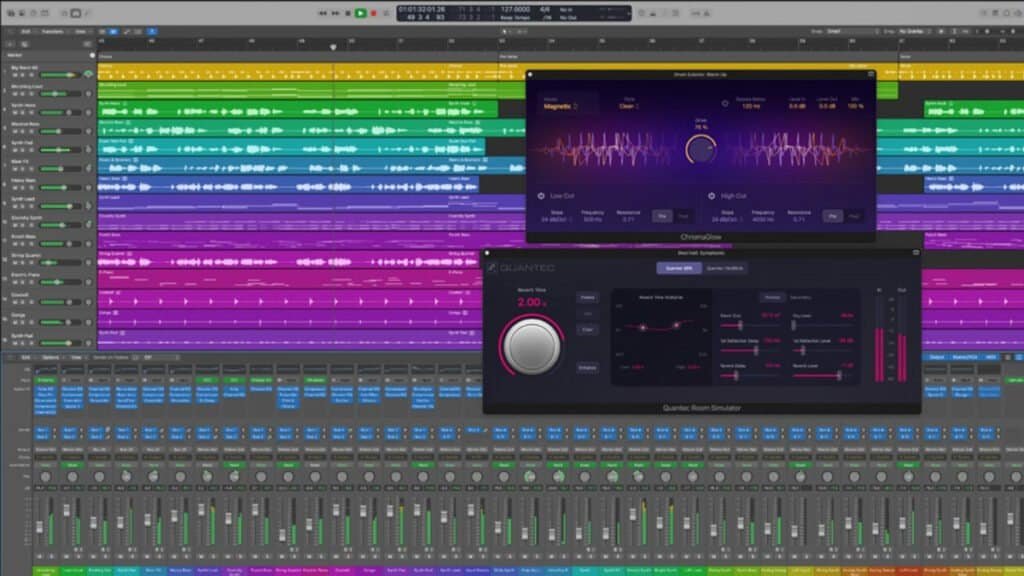
Apple’s Logic Pro continues to dominate for composers who work in-the-box. Its powerful MIDI engine, deep sampler integration (Sampler, Alchemy, Drum Machine Designer), and built-in orchestral instruments, and auto session players, like Drummer, make it an unbeatable value for $199. Logic’s recent updates added spatial audio mixing and improved video-sync stability — making it ideal for film composers working entirely on macOS. I’ll admit I am biased as I use Logic Pro the most for my sessions.
- Pros: Affordable one-time price; smooth integration with Final Cut and Apple ecosystem; excellent built-in plugins, sounds, and effects.
- Cons: Mac only; limited collaborative tools for remote teams. Not as strong for loops & samples based compositions.
🎼 2. Cubase Pro (Steinberg)
Best for: advanced MIDI editing, powerful audio editing and warping tools, and robust mixing and composition features
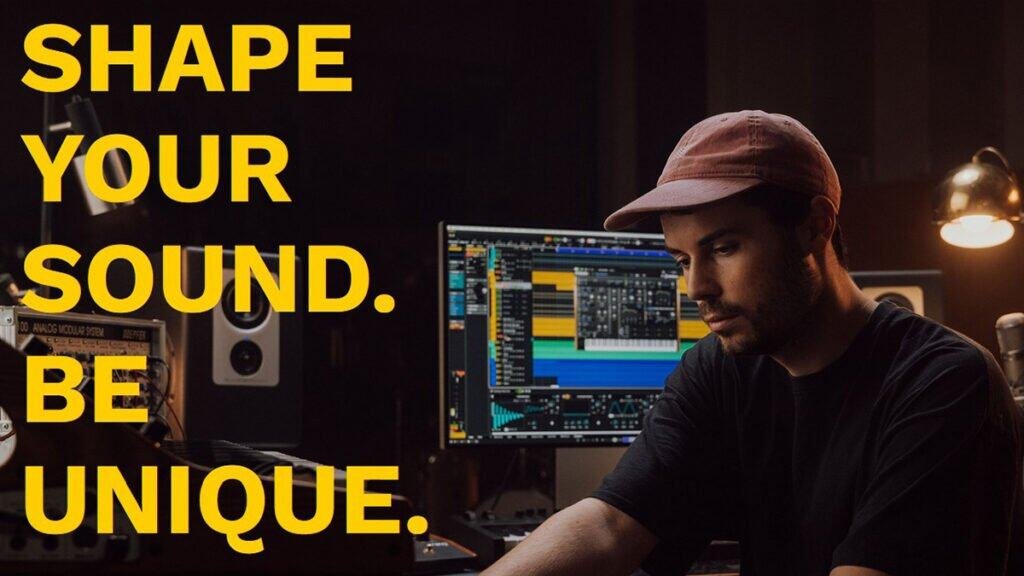
Cubase remains the gold standard among film and TV composers for its MIDI expression control, tempo track precision, and scoring editor. Big names like Hans Zimmer and Lorne Balfe rely on it for a reason. The Expression Maps feature allows you to control complex sample libraries like Spitfire Audio or Orchestral Tools effortlessly. I used Cubase early on in my career and I always thought is was very intuitive, I’m planning on digging back into it soon.
- Pros: Best-in-class MIDI and scoring tools; smooth integration with video timelines; supports large templates efficiently.
- Cons: Steeper learning curve; higher upfront cost.
🎚️ 3. Pro Tools Studio (Avid)
Best for: Post-production scoring and professional studio integration.
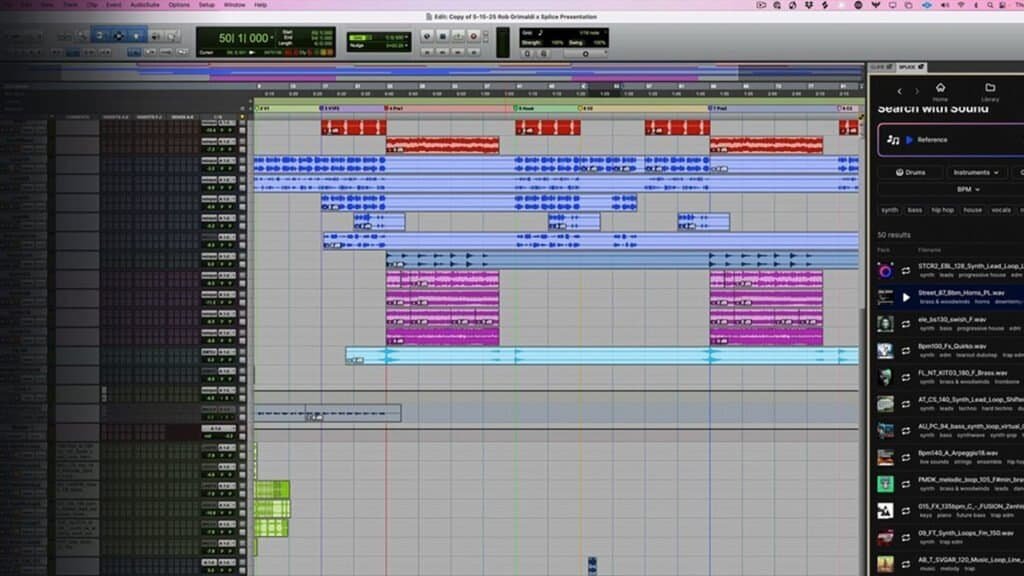
Pro Tools remains the industry standard for recording, editing, and mixing — especially in professional post houses. With improved MIDI performance and native Apple Silicon support, it’s more composer-friendly than ever. Its sync and automation precision make it ideal for scoring where sound design and dialogue mixing converge.
- Pros: Unmatched for audio post and mixing; great for hybrid score + sound design work; widely supported in pro environments.
- Cons: Subscription-based (no perpetual license); limited built-in virtual instruments.
🎛️ 4. Ableton Live 12
Best for: Hybrid electronic / cinematic composers.
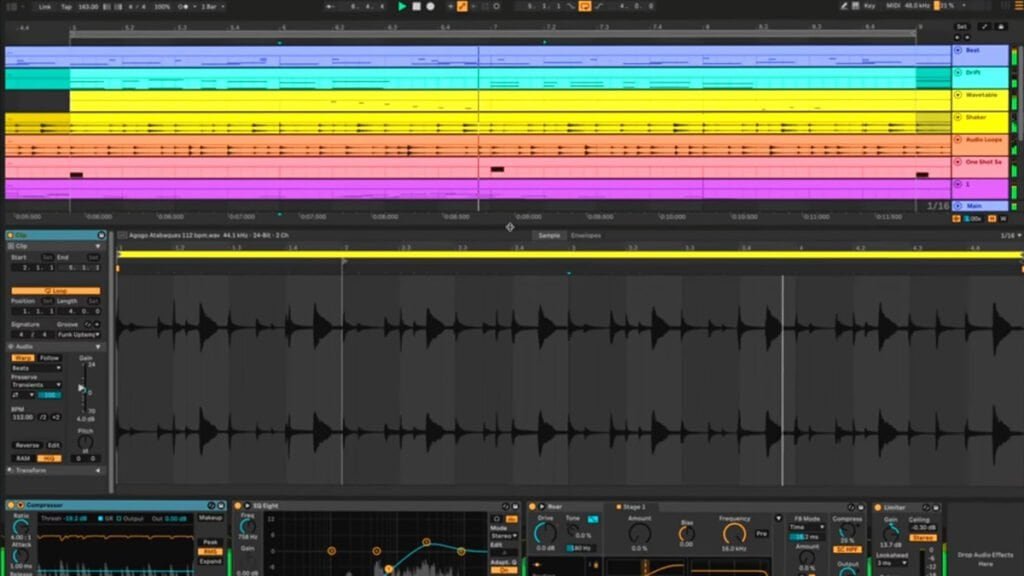
Ableton’s latest version is a creative powerhouse for composers blending electronic, cinematic, and modern hybrid sounds. Its Session View makes experimenting with textures and loops lightning-fast, while its new Max for Live devices extend what’s possible with automation and generative composition. Using the DAW in a live setting is also known as one of it’s awesome uniquely creative strong points.
- Pros: Perfect for modern, loop-driven workflows; powerful effects and creative devices; seamless integration with Push controller.
- Cons: Lacks dedicated scoring tools; less suited to orchestral mockups.
🎹 5. Studio One 6 (PreSonus)
Best for: Composers seeking speed, simplicity, and affordability.
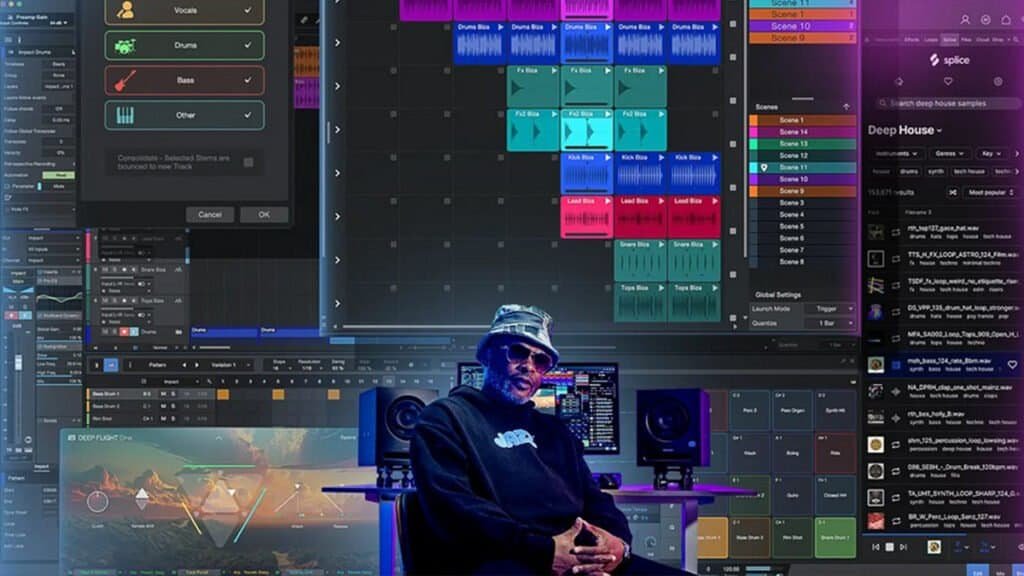
Studio One 6 has quietly become a favorite for film composers who value intuitive layout and fast setup. Its drag-and-drop interface, built-in video track, and chord detection make writing and editing cues efficient. It also integrates natively with Notion for quick notation tasks.
- Pros: Clean interface and smooth workflow; great built-in mastering and video tools; affordable compared to most pro DAWs.
- Cons: Slightly fewer orchestral-specific features; fewer online tutorials compared to Logic or Cubase.
🎬 Final Thoughts: The Best DAW for You
Ultimately, the best DAW is the one that helps you move quickly from inspiration to finished score. Logic Pro is unbeatable for value, Cubase sometimes dominates orchestral work, and Pro Tools rules in post environments. Ableton and Studio One, meanwhile, give hybrid composers unmatched creative flexibility and inspiration. Which ever DAW you find intuitive and gets you in the flow state faster and more consistently may just be the right one for you.
No matter your workflow, each of these DAWs can serve as the backbone of your composing studio in 2025.
Next Step: Explore our Software Plugins and Recording Hardware sections to build the ultimate setup for your scoring career.